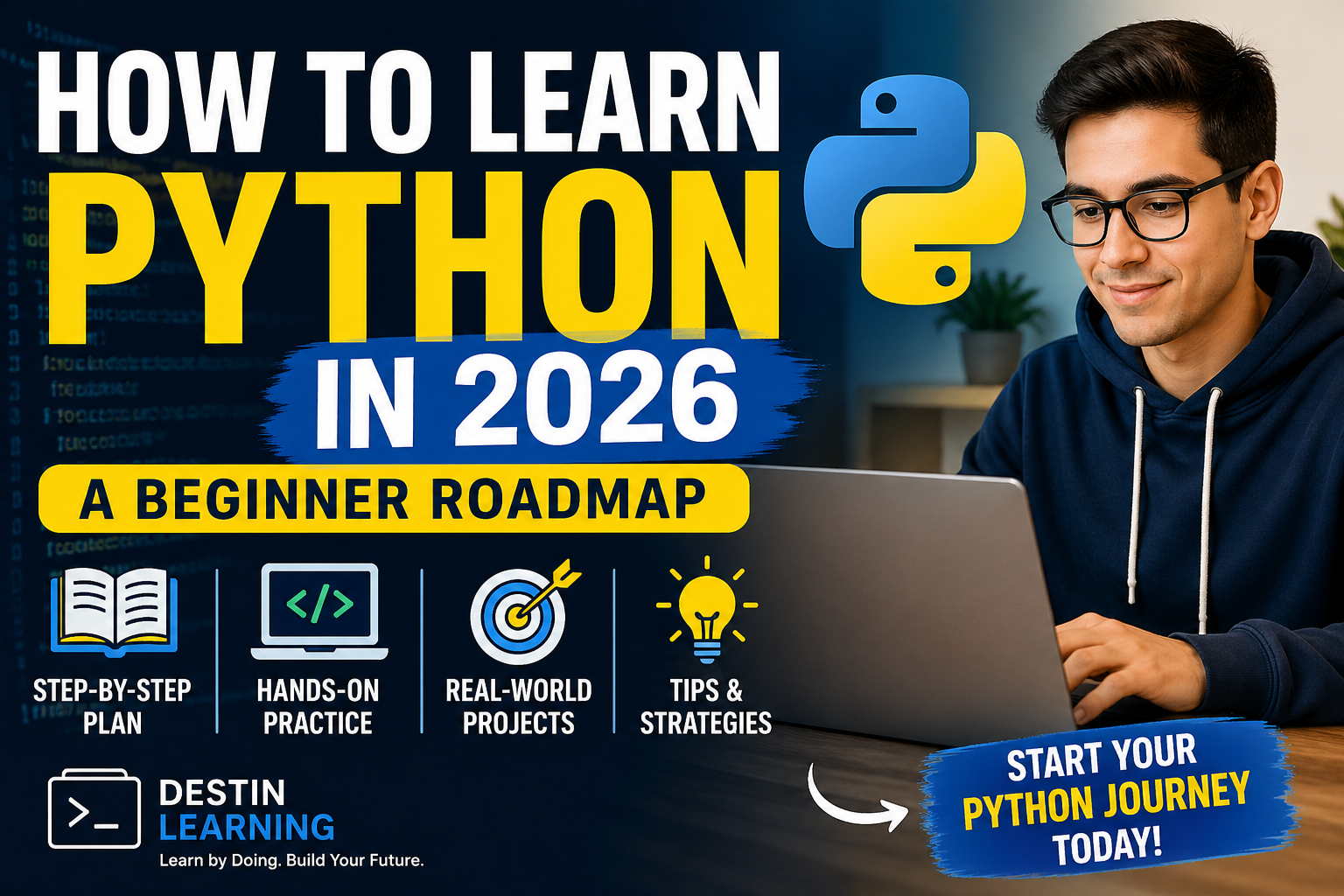
How to Learn Python in 2026: A Beginner Roadmap
Introduction
If you are thinking about learning Python in 2026, you are making a smart choice.
Python continues to be one of the most popular programming languages in the world because it is:
- Easy for beginners to read and understand
- Powerful enough for professional developers
- Used in artificial intelligence and machine learning
- Popular for web development
- Excellent for automation and scripting
- Valuable in data analysis and cybersecurity
Whether your goal is to start a new career, automate tasks, build apps, or simply learn a valuable skill, Python is one of the best places to begin.
This roadmap will show you exactly how to learn Python step-by-step.
Why Learn Python in 2026?
Python remains in high demand because companies continue using it for many types of work.
Common Uses of Python
- Web applications
- AI tools
- Machine learning systems
- Data analytics
- Cloud automation
- Cybersecurity scripting
- Business process automation
- APIs and backend systems
Many entry-level learners choose Python because it allows them to start building useful programs quickly.
Step 1: Learn the Core Basics
Your first goal should be learning the fundamentals.
Focus on These Topics First
- Variables
- Strings
- Numbers
- Input and output
- If statements
- Loops
- Functions
- Lists
- Dictionaries
- File reading and writing
Do not rush. Strong fundamentals create long-term success.
Example: Hello World
print("Hello, World!")
Example: Variables
name = "Eric"
age = 45

print(name)
print(age)
Example: If Statement
score = 85

if score >= 70:
    print("You passed!")
else:
    print("Keep practicing.")
Step 2: Learn by Practicing, Not Just Watching Videos
One of the biggest mistakes beginners make is watching endless tutorials without coding.
The fastest way to learn Python is to type code, run code, break code, and fix code.
Best Practice Methods
- Daily coding exercises
- Small beginner projects
- Debugging errors
- Rewriting examples from memory
- Building your own versions of sample programs
Great Beginner Practice Projects
- Calculator
- To-do list
- Quiz game
- Password generator
- Expense tracker
- Number guessing game
Hands-on labs are one of the best ways to build real skills.
Step 3: Build a 30-Day Python Plan
Consistency matters more than intensity.
Week 1: Fundamentals
Learn:
- print()
- variables
- input()
- strings
- math operations
Week 2: Logic
Learn:
- if statements
- comparison operators
- loops
Week 3: Data Structures
Learn:
- lists
- dictionaries
- tuples
Week 4: Projects
Build:
- quiz app
- calculator
- file tracker
- mini business tool
Even 30 minutes per day adds up quickly.
Step 4: Learn Real-World Tools
After basics, start learning tools professionals use.
Recommended Next Topics
- Visual Studio Code
- Git
- GitHub
- Virtual environments
- APIs
- Flask web development
- SQL databases
- Cloud deployment
These skills help move you from hobbyist to job-ready.
Step 5: Build a Portfolio
If your goal is career growth, create proof of your skills.
Portfolio Ideas
- Python calculator app
- Weather API project
- Personal budget tracker
- Flask website
- Automation script for spreadsheets
- Database reporting tool
Employers love seeing real projects.
Common Mistakes to Avoid
1. Tutorial Addiction
Watching videos is not enough.
2. Quitting Too Early
Programming feels confusing at first. Keep going.
3. Avoiding Errors
Errors are part of learning.
4. Jumping Between Languages
Focus on Python first.
5. No Practice Schedule
Consistency wins.
How Long Does It Take to Learn Python?
Many beginners can learn the basics in:
- 30 days of focused practice
- 90 days to build projects
- 6 months to become highly capable
Your speed depends on consistency.
Why Hands-On Labs Matter
Reading books and watching videos help, but coding is where growth happens.
Hands-on browser-based labs allow you to practice immediately without complicated software installation.
That is one of the fastest ways to build momentum.
Final Thoughts
Python is still one of the best skills to learn in 2026.
If you stay consistent, build projects, and practice regularly, Python can open doors to:
- IT careers
- Software development
- Automation consulting
- Freelancing
- Data careers
- AI opportunities
Start small. Keep coding. Improve every week.
Ready to Practice Python?
Visit Destin Learning Labs to practice Python directly in your browser with hands-on beginner-friendly coding labs.
Start today and build real skills through action.