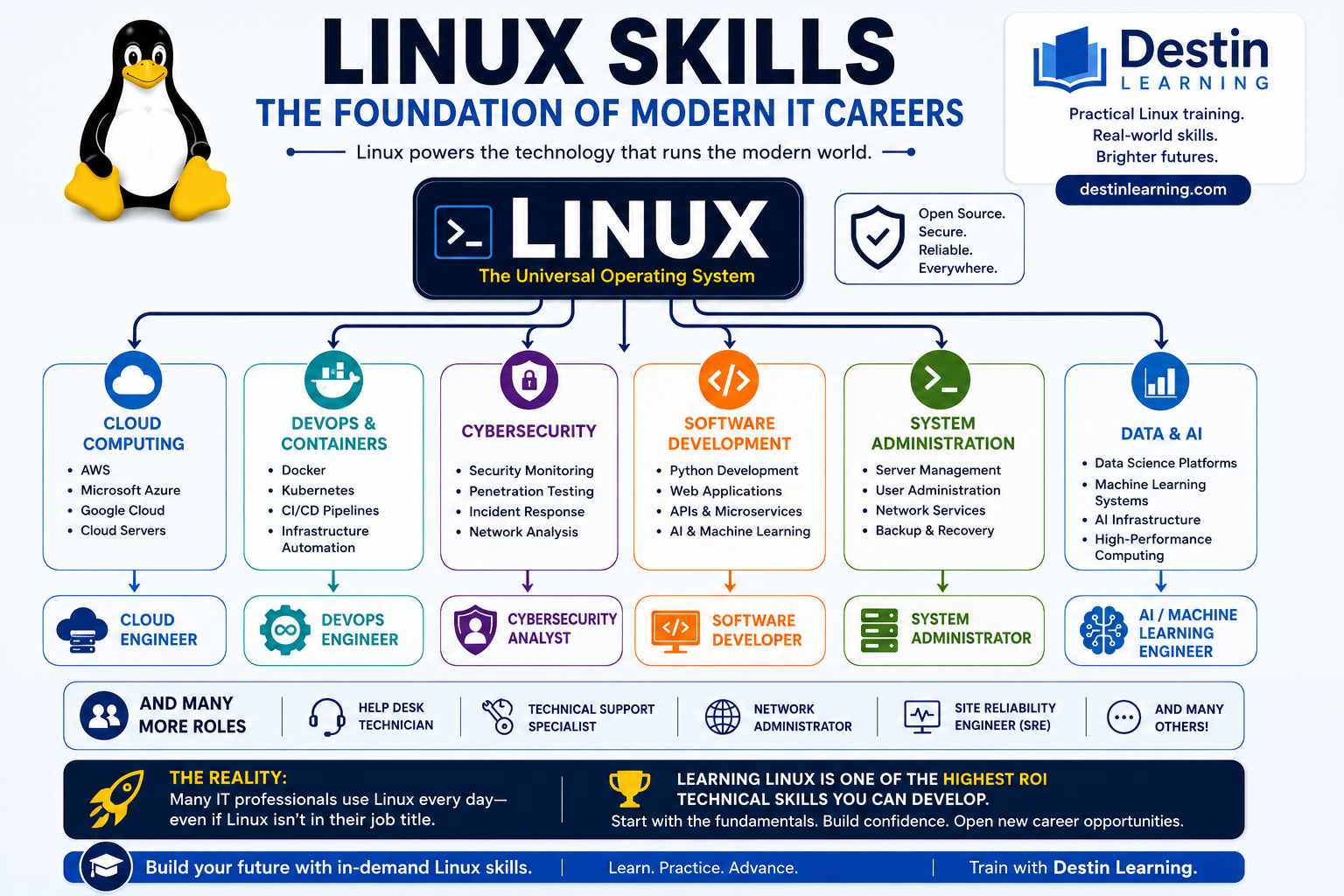
Why Linux Skills Are the Foundation of Many IT Careers
Published by Destin Learning
If you're considering a career in information technology, one of the best investments you can make is learning Linux.
Many people associate Linux with system administrators and server rooms, but the reality is much broader. Linux powers much of the modern technology landscape, from cloud computing and cybersecurity to software development, artificial intelligence, and DevOps. Even if Linux is not listed in a job title, IT professionals often use Linux-based systems every day.
In today's technology-driven world, Linux has become one of the most valuable foundational skills an aspiring IT professional can develop.
What Is Linux?
Linux is an open-source operating system that was first introduced in 1991. Since then, it has grown into one of the most widely used operating systems in the world.
Unlike proprietary operating systems, Linux is freely available and can be modified by anyone. This flexibility has made it the preferred platform for servers, cloud infrastructure, embedded devices, and enterprise applications.
Many of the websites, applications, and online services you use every day are running on Linux servers behind the scenes.
Linux and Cloud Computing
Cloud computing has transformed the IT industry, and Linux plays a major role in that transformation.
Major cloud providers such as Amazon Web Services (AWS), Microsoft Azure, and Google Cloud heavily rely on Linux-based systems. Many virtual machines, containers, and cloud-native applications are built on Linux.
Professionals working in cloud-related roles frequently interact with Linux systems to:
- Manage cloud servers
- Configure applications
- Monitor system performance
- Automate deployments
- Troubleshoot issues
For anyone interested in becoming a Cloud Engineer, Linux skills are often considered essential.
Linux and DevOps
DevOps focuses on improving collaboration between software development and IT operations teams. Linux is at the heart of many DevOps tools and workflows.
Popular technologies such as:
- Docker
- Kubernetes
- Jenkins
- GitLab CI/CD
- Ansible
are commonly deployed on Linux systems.
DevOps professionals use Linux to automate infrastructure, deploy applications, manage containers, and build scalable cloud-native environments.
Understanding Linux commands, scripting, and system administration can provide a significant advantage when pursuing a DevOps career.
Linux and Cybersecurity
Cybersecurity professionals often rely on Linux tools and systems for security analysis, penetration testing, and incident response.
Many well-known cybersecurity tools run on Linux, including:
- Nmap
- Wireshark
- Metasploit
- Kali Linux
- Burp Suite
Linux provides security professionals with powerful command-line tools and detailed control over system configuration.
Whether you're investigating security incidents or conducting vulnerability assessments, Linux knowledge can be a critical asset.
Linux and Software Development
Many software developers build and deploy applications on Linux systems.
Linux is particularly popular for:
- Python development
- Java applications
- Web development
- API development
- Database systems
- Open-source projects
Developers often use Linux because it provides excellent programming tools, flexibility, and compatibility with modern development frameworks.
Even developers who primarily work on Windows frequently deploy their applications to Linux servers.
Linux and Artificial Intelligence
Artificial Intelligence and Machine Learning have become some of the fastest-growing areas in technology.
Most AI frameworks are designed to run exceptionally well on Linux systems, including:
- TensorFlow
- PyTorch
- Hugging Face Transformers
- Jupyter Notebook environments
Organizations building AI solutions often deploy Linux-based servers and cloud environments to support training and inference workloads.
For aspiring AI engineers and machine learning professionals, Linux knowledge is becoming increasingly valuable.
Linux and System Administration
System administration remains one of the most direct career paths that benefits from Linux expertise.
System administrators are responsible for:
- Managing users and permissions
- Configuring servers
- Monitoring system performance
- Implementing backups
- Maintaining network services
Linux skills help administrators manage reliable and secure infrastructure that supports business operations.
Many professionals begin their careers in technical support or help desk roles and eventually advance into Linux administration positions.
Career Opportunities That Benefit from Linux Skills
Learning Linux can help prepare you for a wide variety of IT careers, including:
- Help Desk Technician
- Technical Support Specialist
- System Administrator
- Network Administrator
- Cloud Engineer
- DevOps Engineer
- Cybersecurity Analyst
- Software Developer
- Site Reliability Engineer (SRE)
- AI and Machine Learning Engineer
The versatility of Linux makes it one of the few skills that can support multiple career paths.
Getting Started with Linux
The good news is that Linux is easier to learn than many people think.
You can start by learning:
- Basic Linux commands
- Navigating the file system
- Creating and managing files
- User and permission management
- Shell scripting fundamentals
- Installing software
- Managing processes and services
With consistent practice, most beginners can become comfortable using Linux in just a few weeks.
Hands-on experience is the key to success. Reading about Linux is helpful, but using Linux regularly is what builds confidence and practical skills.
Final Thoughts
Technology continues to evolve rapidly, but Linux remains one of the most important foundations of modern computing.
Whether your goal is cloud computing, cybersecurity, software development, DevOps, artificial intelligence, or system administration, Linux skills can help you stand out and open new career opportunities.
If you're looking for a place to start, focus on learning the Linux fundamentals and gaining hands-on experience. The time you invest today can provide benefits throughout your entire IT career.
At Destin Learning, we believe that practical, hands-on training is the best way to learn technology. Our Linux courses and labs are designed to help students build real-world skills that employers value.
The future of IT is built on Linux. Learning it today can help prepare you for the opportunities of tomorrow.